
Website Terms and Conditions in 2026: What Every Business Should Include
August 15, 2026
Website terms and conditions are not just legal boilerplate. In 2026, they remain one of the most practical tools a business has for setting expectations, reducing operational risk, and clarifying what users can and cannot do on a website. They also work best when they are paired with a separate privacy notice, cookie consent flow, and, where relevant, product-specific policies. In other words, good terms are part legal shield and part customer communication tool.
The challenge is that the web has changed. Users expect clearer disclosures, more control over tracking, and less “implied consent” from simply browsing a site. Regulators have also pushed businesses toward more explicit, plain-language notices and affirmative choices in many contexts, especially for consent-based data processing and cookies. Under EU guidance, valid consent must be freely given, informed, specific, unambiguous, and expressed through a clear affirmative act; it also must be easy to withdraw. The EU’s cookie guidance similarly emphasizes clear information and prior consent for cookies that are not strictly necessary. (commission.europa.eu)
For businesses, that means terms and conditions need to do more than sound authoritative. They should reflect the actual business model, the actual user experience, and the actual legal obligations that apply to the site. This post breaks down what website terms should include in 2026, how to write them clearly, and where terms end and privacy obligations begin.
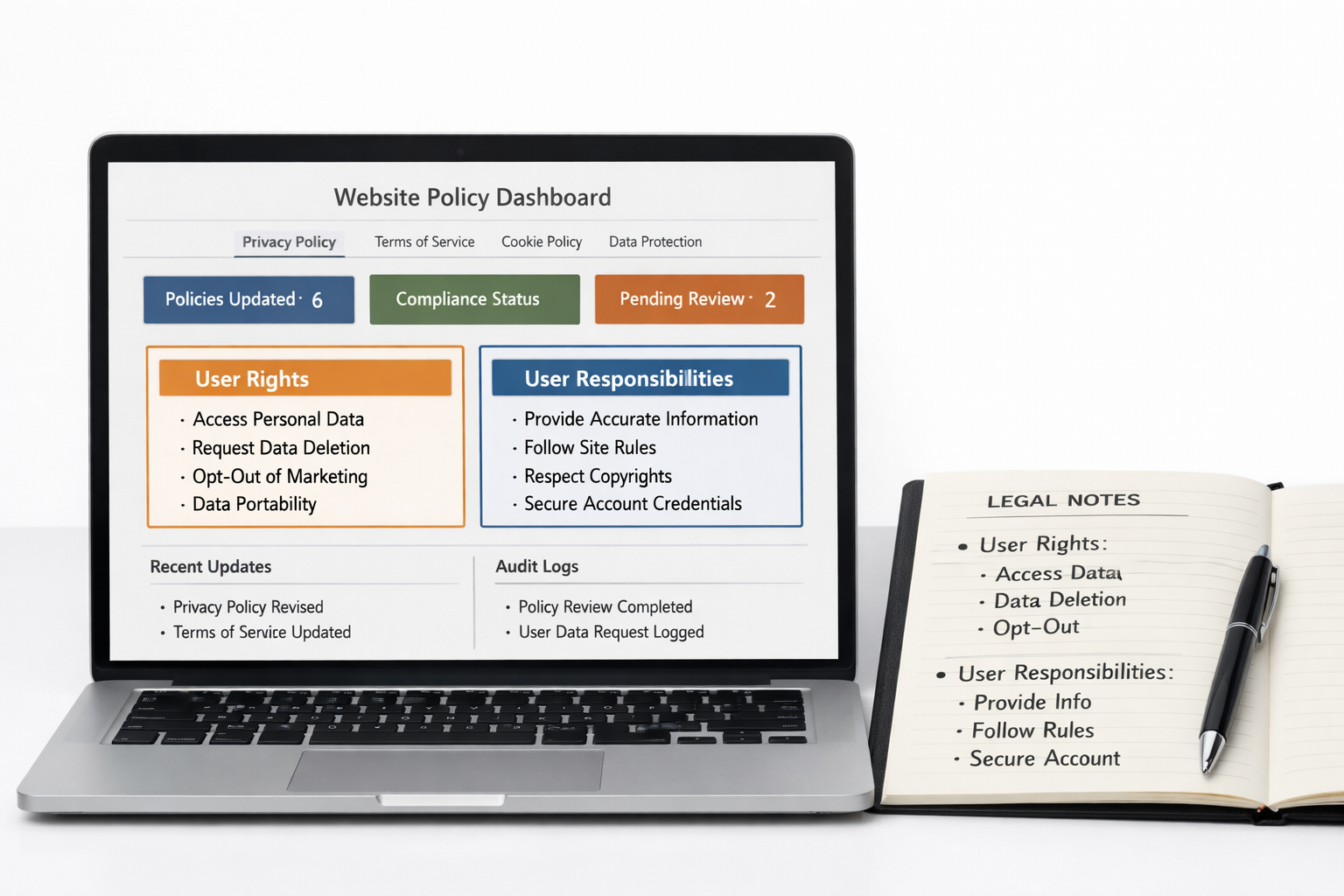
1. Why website terms still matter: reducing risk, setting expectations, and supporting trust
Website terms still matter because they help businesses define the rules of engagement. A website is often the first—and sometimes the only—place where a company interacts with customers, leads, members, or community participants. Terms give the business a central place to explain what the site is for, who may use it, what conduct is prohibited, what the business promises, and what it does not promise. That clarity can reduce disputes before they start.
From a risk perspective, terms can help address misuse, unauthorized scraping, spam, fraudulent submissions, abuse of forms, and attempts to repurpose content. They can also support internal consistency. If your sales page says one thing, your support team says another, and your legal pages say a third, you create confusion and increase the chance of complaints or enforcement issues. A well-drafted terms page aligns expectations across the site.
Terms also support trust when they are written honestly. Users generally do not object to clear rules; they object to hidden rules. If the terms explain age restrictions, account rules, acceptable use, user content permissions, or dispute boundaries in a readable way, the business looks more organized and more credible. That matters because modern users routinely compare sites based on transparency. The European Commission’s consent guidance specifically emphasizes clear and plain language, and separate notices rather than burying consent issues inside lengthy legal text. That same principle is useful for terms: clarity improves compliance and trust at the same time. (commission.europa.eu)
Businesses should also think of terms as a governance tool. A strong terms page helps support moderation decisions, account suspensions, takedown actions, and enforcement of acceptable-use rules. Without it, enforcement can seem arbitrary. With it, the company can point to published standards. In practice, that makes the site easier to run, easier to scale, and easier to defend if challenged.
2. What’s changed recently: clearer consent standards, privacy expectations, and the move away from assuming consent through site visits
One of the biggest changes in recent years is the decline of “browse the site and you’ve accepted everything” thinking. Consent standards have become more explicit, especially where personal data is involved. The European Commission states that valid consent must be freely given, informed, specific, unambiguous, and given through a clear affirmative act, and it must be possible to withdraw consent. It also stresses that consent requests should be clear and distinct from other information, such as terms and conditions. (commission.europa.eu)
That matters because many older websites treated continued use of a site as enough to infer consent to broad collection or tracking. In 2026, that is a risky assumption. The EU’s cookie guidance explains that cookies requiring consent cannot be set when the page is first opened, and users must receive clear information about the purpose of the cookies. Consent must be as easy to withdraw as it is to give. (europa.eu)
In the U.S., the privacy landscape is still more fragmented than in the EU, but expectations are shifting in the same direction. The FTC continues to emphasize consumer privacy practices on its own sites and provides examples of privacy disclosures and third-party service relationships. California’s privacy materials likewise reflect a more disclosure-driven, rights-based model, with businesses expected to explain how they collect and use personal information. (ftc.gov)
The practical takeaway is simple: website terms should no longer pretend they are a substitute for privacy disclosures or consent tools. Terms can describe the rules of use, but they should not silently authorize tracking that requires separate notice or opt-in. If your site uses analytics, ad tech, remarketing, or other non-essential cookies, the consent mechanism should be separate and specific where required. (europa.eu)
This shift also affects user experience. Businesses that reduce friction by assuming consent may create more legal risk and more user distrust. Businesses that separate legal documents, explain each purpose clearly, and offer meaningful choices tend to be better positioned for both compliance and customer confidence.
3. The core building blocks of effective terms: eligibility, acceptable use, intellectual property, user content, and disclaimers
Effective terms usually contain a predictable set of building blocks, but the details should match the site’s actual use. The first is eligibility. If your site is intended for adults, customers in certain countries, professionals, or account holders, say so. If minors are not allowed to create accounts or post content, that should be clear. Eligibility clauses help with age restrictions, jurisdiction limits, and account validation.
Next comes acceptable use. This section should spell out prohibited conduct in practical terms: illegal activity, harassment, spam, automated scraping, credential sharing, malware, fraud, impersonation, and attempts to disrupt the site. The more concrete this section is, the easier it is to enforce. Vague language like “no bad behavior” is not enough. Users need examples.
Intellectual property provisions are another core pillar. These clauses should clarify that the business owns or licenses the site’s text, design, branding, logos, software, and other protected content, while users retain rights in the materials they submit, subject to the license they grant the business. If you use stock photos, third-party integrations, or open-source tools, the terms should avoid overclaiming ownership. Overbroad IP language can create confusion and undermine credibility.
User content provisions are especially important for blogs, forums, marketplaces, review sites, and communities. The terms should explain what users can submit, what license they grant the site to host, display, distribute, or modify the content as necessary, and what content may be removed. If submissions can appear publicly, the terms should say that clearly.
Finally, disclaimers help set boundaries. Most businesses include disclaimers about service availability, third-party links, informational content, and reliance on site materials. A disclaimer should not be a loophole for careless operation, but it can reduce misunderstandings. It is particularly helpful for sites that publish educational content, product comparisons, or user-generated information.
A strong set of terms organizes these clauses logically. Users should be able to understand the site’s rules without decoding a wall of legal text. That is good legal drafting and good customer design.
4. How to write plain-language terms without losing legal strength: practical wording strategies and structure
Plain-language terms are not “less legal.” Done correctly, they are often more defensible because they are easier to read, easier to navigate, and harder to argue were hidden or misleading. The main goal is not to remove legal precision; it is to reduce unnecessary complexity.
A good starting point is structure. Use short headings, one topic per section, and a table of contents for longer documents. Put the most important operational rules near the top: who may use the site, what is allowed, what is prohibited, how content works, and how liability is handled. If you bury key rules in dense prose, users may claim they never saw them.
Next, use concrete verbs. Instead of saying “the user hereby covenants not to,” say “you must not.” Instead of “the company may, in its sole discretion,” say “we may suspend or remove access if we reasonably believe…” This keeps the tone direct without weakening the rule.
You can also use examples. For acceptable use, examples make the clause more useful and more understandable. For liability or warranties, examples help users see what the disclaimer covers. Examples should be illustrative, not exhaustive, so the legal scope remains flexible.
Another useful tactic is to separate rules from explanations. A rule might say: “You may not upload content that infringes another person’s rights.” A short explanation can follow: “For example, do not upload photos, music, or text you do not have permission to use.” That combination preserves legal strength while improving comprehension.
Tone matters too. Overly aggressive language can make a business sound suspicious or hostile. A professional but accessible tone is usually better. The European Commission notes that consent-related information should use clear and plain language and be clearly visible, and that principle translates well to legal drafting generally. (commission.europa.eu)
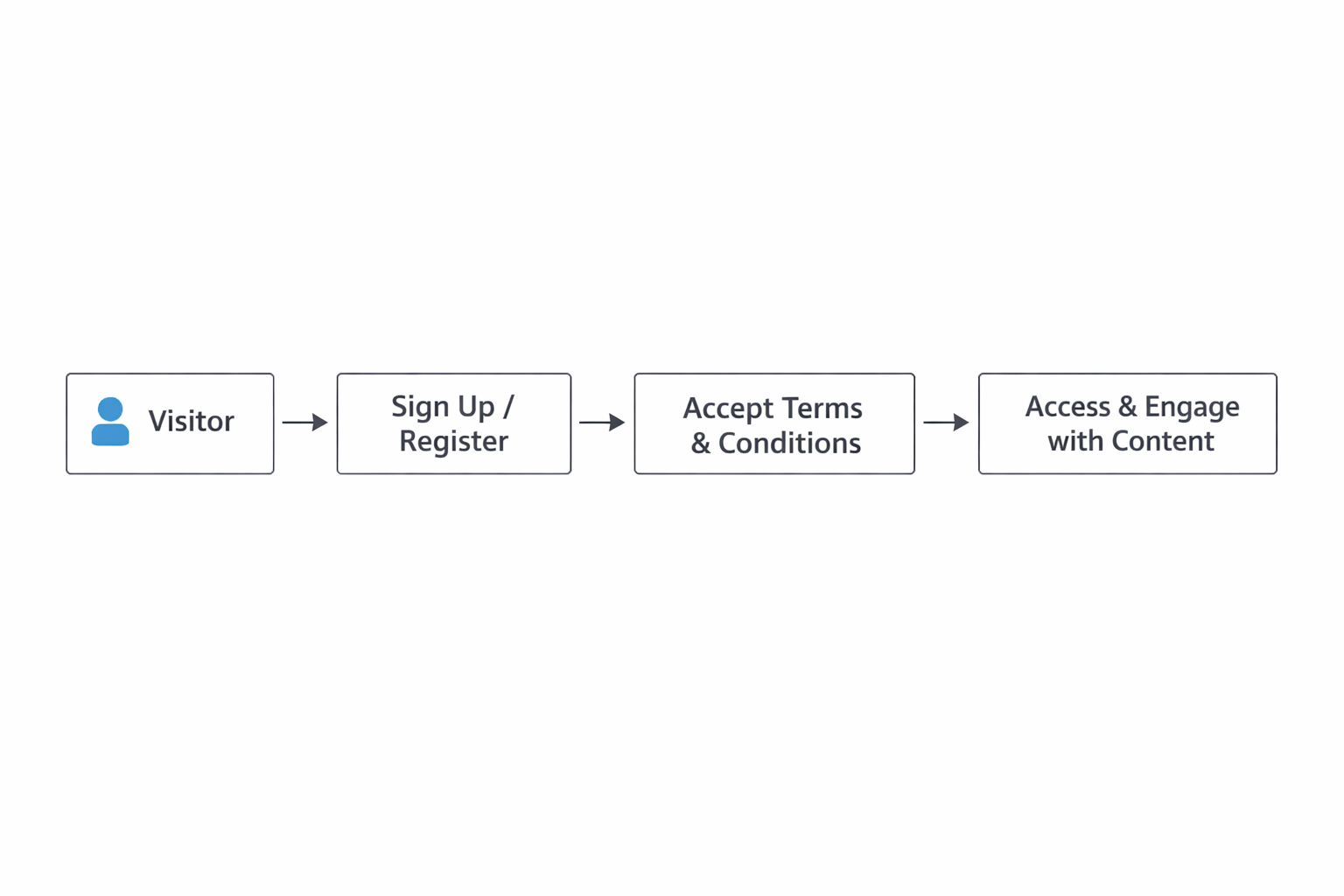
Finally, test readability. Ask someone outside the legal team to read the draft and summarize the main rules. If they cannot, the document probably needs revision. Good terms are not judged by how impressive they sound; they are judged by whether they work when a real user, customer, or regulator reads them.
5. Cookies, tracking, and consent: where terms end and privacy notices begin
A common mistake is using the terms and conditions page as a catch-all for privacy disclosures. That approach is outdated and often ineffective. Terms and conditions typically govern site use, while privacy notices explain how personal data is collected, used, shared, retained, and protected. Cookie consent mechanisms, where required, are a third layer.
The EU guidance is clear that cookies requiring consent cannot be set before consent is obtained, and users must receive clear and comprehensive information about what the cookies do and why they are used. It also says withdrawal of consent must be as easy as giving consent. (europa.eu)
That means the terms page should not try to do the job of a privacy notice or a consent banner. Terms can explain that the site may use cookies or similar technologies in accordance with the separate privacy/cookie policy, but they should not be the only place this is mentioned. If your site uses advertising tags, analytics, embedded media, or cross-site tracking, users need a dedicated privacy/cookie disclosure path.
In practical terms:
Terms explain rules of use.
Privacy notice explains data handling.
Cookie banner or consent tool handles required choices for non-essential tracking.
In the U.S., privacy obligations vary by state and sector, but the direction of travel is toward more transparency. California’s privacy materials show how businesses are expected to explain collection and use practices in accessible ways, reflecting the broader move toward disclosure and user rights. (oag.ca.gov)
A useful drafting rule is to keep the terms language high-level. For example: “We use cookies and similar technologies as described in our Privacy Policy and Cookie Notice.” That tells users where to look without trying to cram privacy law into the terms document. If your site has multiple jurisdictions or distinct consent regimes, use geo-targeted tools or layered notices rather than one oversized legal page.
6. User-generated content and community rules: moderating comments, submissions, and uploads responsibly
If your site allows comments, reviews, uploads, testimonials, message boards, or community profiles, your terms need a strong user-generated content section. This is one of the highest-risk areas because it mixes legal, reputational, and operational issues.
Start by defining what counts as user content. Comments, photos, videos, audio, text, ratings, profile information, and direct messages may all need to be covered. Then explain what rights the user keeps and what permissions they grant to the site. Typically, the business needs a license to host, display, reproduce, adapt, and distribute the content in connection with operating the service.
Moderation rules should be practical and visible. If a community allows only respectful, lawful content, say that clearly. If the business reserves the right to remove content for spam, hate speech, harassment, impersonation, copyright issues, or security concerns, say that too. It is also wise to state whether moderation is pre-publication, post-publication, human, automated, or a mix.
Responsibility matters as much as control. If your site invites users to submit content, the terms should make clear that users are responsible for what they post and that they must have the rights needed to share it. That helps with copyright issues, privacy complaints, defamation risk, and false endorsements.
At the same time, moderation rules should not create a false sense of absolute safety. If a site promises “we review everything,” users may assume the business is guaranteeing accuracy or legality. A more defensible approach is to say that the company may review, remove, or restrict content but is not obligated to monitor all content in advance. This balances operational reality with legal caution.
The European Commission’s requirement that consent be specific and clear is a good reminder here: users should know what they are agreeing to when they upload content, and the permission should not be hidden in broad, vague phrasing. (commission.europa.eu)
7. Linking, embeds, and brand usage: how to protect your site while allowing fair sharing
Modern websites are designed to be shared. People link to pages, embed videos, quote excerpts, and reference brands on social media. Terms should protect the business without overreaching and trying to control ordinary internet behavior.
For linking, the terms can say that other sites may link to publicly available pages so long as the link is not misleading, defamatory, or suggestive of endorsement. If your business wants stricter control over commercial use of links or framing, that can be stated too. But overly restrictive anti-linking rules often frustrate users and may be hard to enforce in practice.
For embeds, the terms should explain whether content may be embedded, whether attribution is required, and whether embedded use must preserve context. This is especially relevant for video, podcasts, maps, and interactive tools. If you rely on third-party embeds, your own terms should also reflect that third-party services may have separate terms or privacy practices.
For brand usage, be specific. Users should not be able to imply sponsorship or official affiliation without permission. You can permit nominative use—such as referencing the company name for truthful discussion—while prohibiting logo misuse, fake endorsement, or confusingly similar branding. That is a more balanced approach than banning all mention of the brand.
This section should also address framing and scraping if those are concerns. If your business depends on page views, subscriptions, or controlled content experiences, it is sensible to prohibit automated extraction, cloning, or unauthorized distribution of site content. The acceptable-use section can work together with the linking and brand sections to protect both the business and the user experience.
Importantly, these rules should not conflict with lawfully protected speech, fair use, or other statutory rights. A term that is too broad may look aggressive but offer little practical protection. A narrower, better-targeted rule is usually more useful.
8. Liability limits and legal boundaries: what businesses can usually limit, and what they cannot
Liability limits are one of the most important parts of website terms, but they must be written carefully. In general, businesses use these clauses to reduce exposure for indirect damages, incidental losses, lost profits, or service interruptions. They may also limit the total amount of damages to a fee paid in some commercial contexts, depending on the business model and applicable law.
But there are boundaries. A website cannot usually disclaim everything. Laws in many jurisdictions limit the ability to waive liability for fraud, intentional misconduct, gross negligence, or other non-waivable rights. Consumer protection laws can also restrict overbroad limitations, especially if the terms are presented in a way that is unfair, deceptive, or not properly disclosed.
That is why the structure and placement of the liability language matter. If a company wants to rely on a limitation clause, it should be written clearly, set off from surrounding text, and tailored to the actual service. A SaaS platform, an ecommerce store, a news site, and a community forum all have different risk profiles. A one-size-fits-all clause is rarely optimal.
Disclaimers of warranties are another common tool. Businesses often say the site is provided “as is” and “as available,” with no guarantee that it will be uninterrupted, error-free, or perfectly secure. That can be helpful, but it should not be used to excuse preventable failures or poor operational practices. Users and regulators are more likely to trust a realistic disclaimer than a sweeping one.
Also, note the relationship between liability language and privacy/tracking. If a site says “we do not track you” but uses analytics or advertising cookies in practice, the terms can become misleading. The FTC and EU materials both point toward transparent, specific disclosure rather than vague assurances. (ftc.gov)
The bottom line: liability clauses should be protective, not theatrical. They should reflect real risk, real services, and real legal limits.
9. Keeping terms current: versioning, update notices, and review schedules for evolving products and laws
Terms are not a one-time project. They should evolve with the business, the product, and the law. If you launch new features—accounts, subscriptions, AI tools, marketplaces, communities, international shipping, or data-sharing partnerships—your terms may need to change as well.
A good practice is to use versioning. Each version should have a date, and the page should clearly show when it was last updated. If you make a material change, explain what changed and how users can review the new terms. This is especially important when users have active accounts or ongoing subscriptions.
You should also create a review schedule. For many businesses, an annual review is the minimum, with additional review whenever there is a major product change, a new jurisdiction, a significant privacy law update, or a new dispute trend. High-growth companies may review terms quarterly.
Update notices are also useful, but they should be proportional. A minor wording correction may not require a pop-up. A major change to arbitration, payment terms, content rights, or account closure rights might. The notice should tell users whether continued use means acceptance, whether explicit agreement is required, and what happens if they do not accept the update.
The move toward clearer consent standards makes this even more important. If your site relies on separate consent flows for cookies or marketing, you need to ensure the terms, privacy notice, and consent preferences all stay synchronized. The European Commission and EU cookie guidance both emphasize clarity, specificity, and the ability to withdraw consent. (commission.europa.eu)
Businesses should also keep an eye on legal developments in the markets they serve. California privacy materials show that state-level privacy expectations continue to evolve, and EU guidance remains a high bar for consent and cookie transparency. (oag.ca.gov)
In short, update your terms the way you update software: regularly, intentionally, and before problems accumulate.
10. A modern checklist for publishing terms that are readable, defensible, and aligned with your business model
Before publishing website terms in 2026, use a checklist that checks both legal coverage and user clarity.
Business model
Does the document reflect what the site actually does?
Does it cover accounts, subscriptions, ecommerce, downloads, community features, or professional services if relevant?
Does it avoid clauses that do not apply?
User eligibility
Is the minimum age or eligibility requirement clear?
Are restricted jurisdictions identified where needed?
Are business vs. consumer users treated differently if necessary?
Acceptable use
Are prohibited behaviors listed in concrete terms?
Are scraping, fraud, spam, malware, and impersonation addressed?
Is enforcement authority explained?
IP and content
Does the business explain ownership of site content?
Do users grant a clear license for uploads or submissions?
Are brand and trademark uses controlled without being overbroad?
User-generated content
Are moderation rights and removal rights stated?
Are users responsible for their submissions?
Are privacy, defamation, and copyright risks addressed?
Disclaimers and liability
Are warranties and service-availability disclaimers realistic?
Are liability limits tailored and not overreaching?
Do the clauses avoid promising impossible protections?
Privacy and cookies
Does the terms page refer users to a separate privacy notice?
Is there a separate cookie notice or consent tool where needed?
Are marketing, analytics, and tracking practices disclosed elsewhere?
Plain language
Are headings clear and helpful?
Are key rules easy to find?
Would a non-lawyer understand the main obligations?
Version control
Is the effective date visible?
Is there a change log or update notice process?
Is there a schedule for legal review?
A useful way to think about this is that good terms do three things at once: they inform users, they protect the business, and they support compliance. If your draft does only one of those, it is not finished yet. If it does all three, it is ready for a real website.
Conclusion
Website terms and conditions in 2026 need to do more than exist. They need to match the actual user experience, reflect modern consent expectations, and work alongside privacy notices and cookie tools rather than trying to replace them. The strongest terms are clear, specific, and practical. They explain who may use the site, what behavior is allowed, how content is handled, what limits exist, and how the business manages liability and updates.
The most important takeaway is that clarity is now a legal advantage. Plain language, separate privacy disclosures, meaningful consent flows, and realistic liability boundaries are not just user-friendly—they are also easier to defend. For businesses, that means a better mix of trust, compliance, and operational control.
If you are publishing or revising your terms this year, focus on the essentials: align the document with your business model, separate it from privacy and cookie notices, write for real people, and review it regularly as your site evolves. That approach creates terms that are readable, defensible, and genuinely useful.