
Building the Next Generation of Virtual Expert Consultations: What Modern Teams Need to Succeed
August 1, 2026
Virtual consultations have moved far beyond the simple “let’s hop on a video call” model. In the early days of remote services, success often meant little more than getting two people into the same digital room. Today, that bar is much higher. Modern users expect a polished experience that feels more like a structured service journey than an improvised meeting: quick discovery, strong trust signals, seamless booking, reliable video, secure payments, and clear next steps after the session ends.
That shift is happening across many expert-driven industries, from healthcare and legal services to coaching, recruiting, financial guidance, and enterprise advisory work. Telehealth has helped normalize remote service delivery and raised expectations for privacy, accessibility, and workflow quality. At the same time, online marketplaces have trained consumers to look for transparent profiles, reviews, verification, and frictionless checkout before they commit. In practice, the winner is no longer just the expert with the best advice; it is the platform that makes finding, booking, and converting expertise feel easy, safe, and outcome-driven. Telehealth guidance from HHS also emphasizes privacy, security, workflow planning, and accessible care delivery, reinforcing the broader move toward more structured virtual service experiences. (telehealth.hhs.gov)
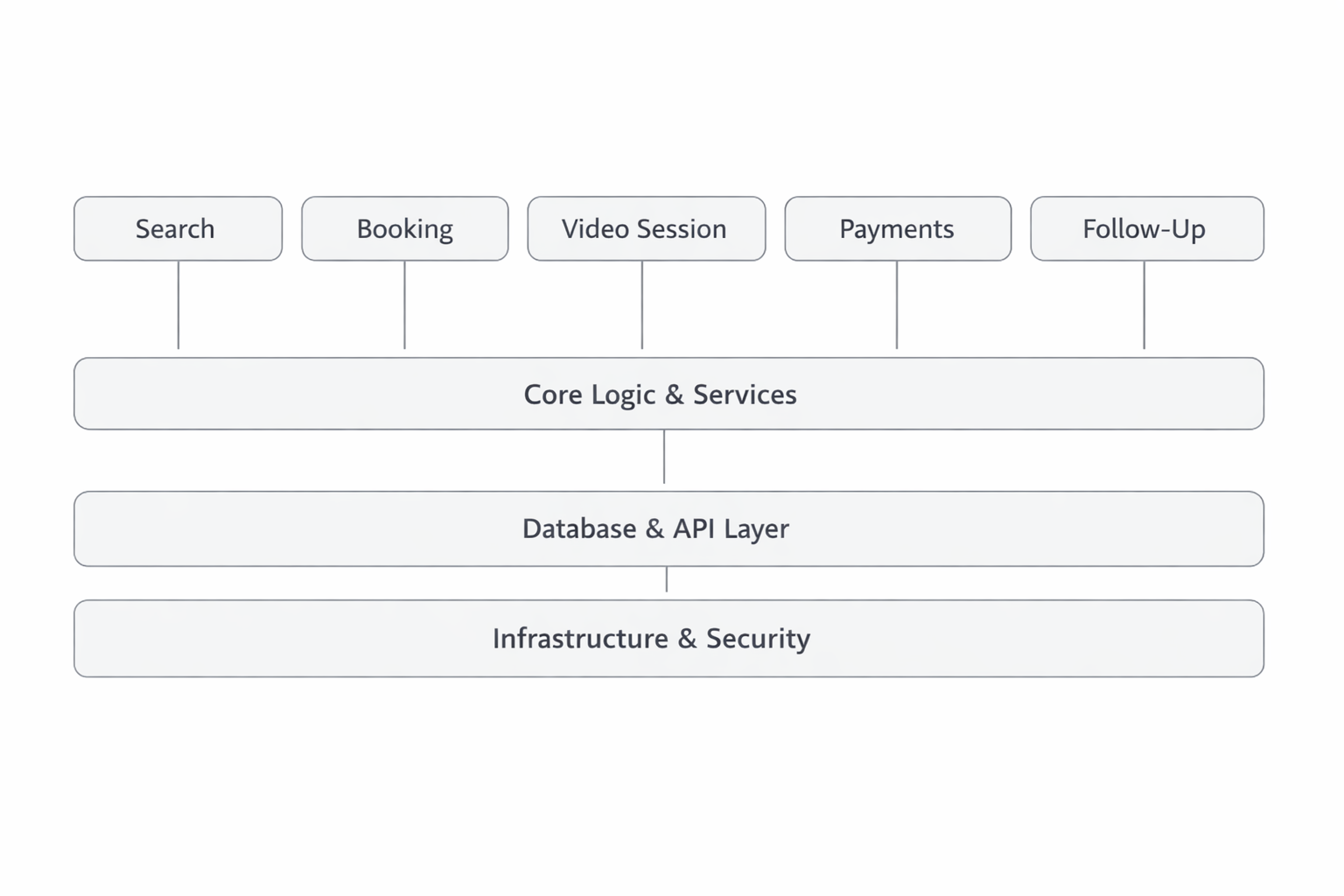
1. The shift from simple video calls to structured expert services
The biggest change in virtual consulting is conceptual: a “call” is no longer the product. The product is the outcome. That distinction matters because generic meetings leave too much to chance. A structured expert service, by contrast, has a clear purpose, a defined format, a priced offer, and a predictable follow-up path. Users are not just trying to talk to someone online; they want a fast answer to a specific problem, a recommendation they can trust, and a next action they can actually execute.
This shift is visible in healthcare and beyond. HHS describes telehealth as encompassing synchronous visits, audio-only options when necessary, and asynchronous communication, which reflects a broader understanding that remote services need the right format for the job rather than a one-size-fits-all meeting experience. HHS also highlights planning, technology evaluation, and workflow design as essential parts of successful telehealth delivery. That same logic now applies to virtual expert services more generally: if the workflow is messy, the consultation feels unreliable, even if the expert is excellent. (telehealth.hhs.gov)
For modern teams, this means building around use cases. A tax expert consultation may require intake forms, document upload, and a recap email. A medical second opinion may need identity verification, privacy controls, and secure record handling. A business strategy session may need note-taking, action items, and CRM follow-up. The market is moving toward guided, outcome-driven consultations because users want reduced uncertainty and better results. In other words, the platform must help answer: What happens before the call, during the call, and after the call? If those steps are not intentionally designed, users feel like they are improvising a professional service from scratch.
That is why the most effective platforms do more than facilitate video. They package expertise into a service: a discovery flow, a booking step, a session structure, and a post-session handoff. The more valuable and sensitive the advice, the more important that structure becomes. Telehealth policy resources and best-practice guidance repeatedly emphasize integrated workflows, patient preparation, and secure communication, which is a strong signal for any organization building virtual expert services at scale. (telehealth.hhs.gov)
2. What users now expect from virtual consultation platforms
User expectations for virtual consultation platforms have matured rapidly. The baseline is no longer “video works.” The baseline is “the whole service feels obvious, fast, and trustworthy.” People now expect instant booking, clear pricing, transparent expertise, reminders, secure payments, and some kind of post-call follow-up that proves the interaction was more than a one-off conversation. If these pieces are missing, even a strong expert can lose the sale.
Instant booking matters because users are often coming to a platform with urgency. They do not want to fill out a long form and wait for an email chain. They want to browse availability, compare options, and reserve a time in minutes. Transparent expertise matters because users need to quickly determine whether the expert is a fit. That means readable profiles, specialty tags, certifications, industry experience, and language support when relevant. Secure payments matter because a consultation is not a casual social interaction; it is a paid professional exchange that may involve sensitive information. The FTC’s guidance on buying health products and services online reminds consumers to look for secure sites, while its privacy guidance stresses that businesses must not overstate security or misrepresent claims like “HIPAA compliant” unless that is actually true. (consumer.ftc.gov)
Session formats are another major expectation. Users increasingly want choices: a short intro call, a one-hour deep dive, a packaged diagnostic session, or an ongoing subscription. Different problems call for different levels of engagement, and the platform should make that easy to understand. Reminders also matter more than many teams realize. Automated confirmations, calendar holds, pre-call nudges, and “what to prepare” messages all reduce no-shows and increase user confidence. HHS recommends preparing patients for telehealth visits and integrating these services into broader workflows, which reinforces how important pre-session communication is for successful remote services. (telehealth.hhs.gov)
Post-call follow-up is where many products still fall short. The modern user expects a summary, next steps, links to resources, or a way to rebook quickly. In expert marketplaces, that follow-up can also include invoices, notes, and suggested actions. The point is simple: if the session ends and nothing else happens, the platform feels incomplete. Virtual consultations now have to behave like a service system, not just a meeting tool.
3. Accessibility and policy tailwinds
The rise of virtual expert consultations is not happening in a vacuum. Remote service delivery has been normalized by telehealth, remote work, and broader consumer comfort with digital transactions. That normalization has changed expectations: users now assume that many kinds of professional help can happen through video, secure messaging, or hybrid formats. HHS notes that telehealth use has risen sharply in recent years and that providers should consider privacy, security, and workflow design when delivering remote care. It also offers guidance on nondiscrimination and accessibility, underscoring that virtual services should work for people with disabilities and limited English proficiency as well as for mainstream users. (telehealth.hhs.gov)
Policy tailwinds matter because they shape what users come to expect as “normal.” When telehealth systems support private communication, HIPAA safeguards, accessibility accommodations, and clear consent processes, users become more comfortable with remote interactions in general. HHS specifically states that covered health care providers and health plans must use technology vendors that comply with HIPAA Rules and enter into business associate agreements when necessary for telehealth technology. That raises the standard not only for healthcare platforms, but for any service handling sensitive information. (telehealth.hhs.gov)
Accessibility is also a product opportunity. A platform that supports screen readers, captions, multi-language interfaces, audio-only fallback, and low-bandwidth video is easier for more people to use. This is not just about compliance; it is about reducing abandonment and widening the market. In practice, many users judge a consultation platform by whether it respects their reality: their device, their internet connection, their language, their privacy needs, and their time constraints. Guidance from HHS on telehealth accessibility and nondiscrimination suggests that those factors are central, not optional. (hhs.gov)
There is also a psychological effect. When users know that remote services are common, accepted, and professionally managed, they are more likely to trust a video-based expert consultation. That trust creates room for more categories to move online, from legal triage and hiring advice to coaching and specialized business consulting. The policy environment is not the entire story, but it is a meaningful tailwind that reinforces the idea that remote expertise is a legitimate, expected service model.
4. Trust as the core product feature
In expert marketplaces, trust is not a side effect of the product; it is the product. Users are not simply paying for access to a video call. They are paying for confidence that the person on the other side is credible, relevant, and safe to engage. That makes profile quality, credential verification, reviews, matching logic, and visible proof of expertise absolutely central.
Strong profiles do a lot of work. They should answer basic questions instantly: Who is this expert? What problems do they solve? What credentials support their work? What industries or cases have they handled? What languages do they speak? What is the expected session format? Users should not need to infer the answer from scattered details. The more clearly a profile communicates fit, the easier it is for a client to act.
Verification is equally important. The FTC’s guidance on marketplace seller verification explains that online marketplaces should reliably determine whether information and documents are valid, corresponding to the seller or an authorized individual, and not falsified. While that guidance is framed around sellers, the principle applies cleanly to expert platforms: if the platform claims someone is licensed, certified, or professionally qualified, it needs a real verification process behind that claim. (ftc.gov)
Reviews and testimonials help too, but they should not be treated as decoration. Users look to reviews for patterns: Is the expert responsive? Do they explain things clearly? Do they solve the right problem? Are clients returning? However, trust signals should be balanced and honest. The FTC warns consumers not to trust a site just because it looks professional or has success stories. That means platforms should avoid gimmicky social proof and instead show credible indicators such as verified sessions, relevant specialties, and concrete outcomes where appropriate. (consumer.ftc.gov)
Matching logic is another trust lever. A platform that simply sorts experts by popularity may not help users find the right fit. Better matching considers the user’s problem, urgency, budget, language, location, industry, and preferred session type. When that matching feels intelligent, the user feels understood before the session even begins. That can dramatically improve conversion and satisfaction.
5. Designing the booking flow for conversion
The booking flow is where interest becomes revenue. Many virtual consultation platforms lose users not because experts are unavailable, but because the scheduling experience is too slow, too vague, or too effortful. If people cannot quickly search, filter, compare, price-check, and reserve a time, they often abandon the process before booking.
Search and filtering should help users answer one simple question: “Who can solve my problem right now?” Good filters usually include expertise area, session format, language, price, availability, rating, and verification status. For some industries, additional filters matter too, such as country, license type, or specialization. The key is not to overwhelm users with options; it is to help them narrow choices efficiently. This is especially important in marketplaces where experts may look similar on the surface but differ substantially in suitability.
Pricing transparency is equally important. A consultation platform should make it clear whether the user is paying per session, per minute, by package, or via subscription. Hidden fees or unclear add-ons create hesitation. If a user is trying to solve a real problem, pricing confusion is enough to stop them from booking. Telehealth guidance on billing and workflow management suggests that remote service delivery is strongest when the process is clearly integrated and operationally predictable. (telehealth.hhs.gov)
Packaging can improve conversion, too. For example, a 15-minute triage call, a 60-minute advisory session, and a three-session package each serve different needs. Packaging helps users self-select while giving experts a clearer product to sell. It also reduces friction because the buyer does not have to invent the scope of the engagement from scratch.

Finally, the scheduling experience should be low-friction. Offer calendar sync, instant confirmation, timezone clarity, rescheduling options, and mobile-friendly checkout. The best booking flows remove uncertainty at every step. They make the next action obvious and quick. In a high-intent environment, every extra click is a risk. A strong booking flow treats conversion as a design problem, not just a sales problem.
6. Video quality, reliability, and continuity
A consultation platform can have excellent experts and a beautiful interface, but if the video call fails, the experience collapses. Reliability is not a technical afterthought; it is a core part of service quality. Users need stable sessions, clear fallback options, device support, and performance monitoring so that the consultation itself is not derailed by preventable issues.
The first priority is robustness across devices and network conditions. People will join from laptops, tablets, and phones, often in imperfect environments. The platform should support common browsers, handle bandwidth fluctuations gracefully, and provide a simple path for users to test audio and video before the appointment. HHS guidance for telehealth emphasizes technology options, connectivity issue planning, and maintaining service quality, which reflects the operational reality of virtual services. (telehealth.hhs.gov)
Fallback options are essential. If a video session drops, can the call continue by audio? Can the user reconnect without starting over? Is there a backup secure link? Can the expert send a message with next steps if the session is interrupted? These details shape whether users feel the platform is dependable. In professional consultations, continuity matters because the conversation often contains important information that cannot easily be repeated.
Performance monitoring also matters at the system level. Teams should track join rates, drop rates, device failures, latency, and session completion rates. When those metrics decline, the product team can diagnose whether the issue is local, regional, browser-specific, or tied to a particular workflow step. The point is not perfection; it is resilience. A good virtual consultation product assumes that problems will happen and designs for graceful recovery.
Security should not be sacrificed for usability. HHS guidance on HIPAA-compliant telehealth technology makes clear that vendors serving covered entities must meet privacy and security obligations. The FTC similarly warns businesses not to overstate security claims or imply compliance without substantiation. For any consultation platform dealing with sensitive conversations, the technical architecture must support both reliability and data protection. (telehealth.hhs.gov)
7. Workflow features that turn consultations into outcomes
The best virtual consultation platforms do more than connect people; they help turn advice into action. That is why workflow features are often the difference between a pleasant session and a valuable business tool. Notes, file sharing, session summaries, action items, CRM integrations, and automated follow-up all help ensure that the consultation continues to create value after the call ends.
Notes are foundational. Experts often need to capture key facts, recommendations, risks, and next steps while the conversation is fresh. Depending on the use case, those notes may be private, shared with the client, or stored for internal reference. File sharing is equally important when documents, screenshots, forms, or reference materials need to be exchanged securely. For many expert services, the real answer depends on the context, and the relevant context may live in a document rather than in spoken words.
Session summaries are one of the most underrated features in the category. A concise recap helps the client remember what was discussed, what was decided, and what they should do next. In high-stakes or complex consultations, summaries reduce confusion and increase follow-through. Action items make that even stronger by transforming advice into a checklist. When the platform generates or structures these deliverables automatically, both the expert and the client save time.
Integrations extend the value of the session into the rest of the business. A consulting firm may want CRM sync. A medical practice may want record linkage. A coaching business may want task automation or email follow-up. HHS guidance on telehealth workflow design and integration underscores that virtual services work best when they are not isolated from broader systems. (telehealth.hhs.gov)
Follow-up automation can include thank-you messages, resource links, payment receipts, rebooking prompts, and reminders about next steps. These automations are not just convenient; they create consistency. They also help experts maintain a higher quality service without manually chasing every administrative detail. The more the platform can handle structured follow-through, the more the expert can focus on actual expertise.
8. Data, privacy, and compliance considerations
Any virtual consultation platform that handles sensitive conversations has to treat privacy and compliance as core design constraints. Users may share health information, financial details, legal concerns, employment records, or other highly personal data. That means the platform must protect communications, limit access, define retention policies, and account for region-specific requirements.
Role-based access control is a practical starting point. Not everyone in the organization needs to see every session, note, or file. Access should be limited to the people who need it for legitimate service delivery, support, or compliance. Audit logs, permission management, and secure administrative tools are all part of a mature setup. HHS guidance on HIPAA and security practices emphasizes safeguards for protected information and recognizes the importance of secure remote access and risk mitigation. (telehealth.hhs.gov)
Retention policies are also critical. Teams should know what data is stored, for how long, where it is stored, and how it is deleted. The answer can vary by industry and jurisdiction. A healthcare-oriented consultation platform may face HIPAA obligations, while another service may need to consider state privacy laws, data breach rules, or contractual commitments to enterprise customers. The important thing is not to improvise these rules after launch. They should be built into the product architecture and policy stack from the beginning.
Region-specific requirements can change quickly, so compliance teams should monitor updates continuously. HHS notes that telehealth licensure requirements vary at the federal, state, and cross-state levels, and its guidance on telehealth billing and policy shows that rules continue to evolve. That means a platform serving multiple regions should not assume one legal setup fits all users. (telehealth.hhs.gov)
Privacy communication matters as much as privacy engineering. Users need plain-language explanations of what data is collected, how it is used, what is shared, and what protections are in place. The FTC warns against making misleading security claims such as “HIPAA compliant” unless the claim is accurate and supportable. Transparency builds trust, while vague assurances create risk. (ftc.gov)
9. Monetization models for expert marketplaces
The monetization model shapes both user behavior and expert supply. Virtual expert platforms can use per-minute billing, fixed-fee sessions, subscriptions, team plans, and enterprise consulting packages, but each model works best in different contexts. The right choice depends on how predictable the service is, how urgent the need is, and how much users value flexibility versus certainty.
Per-minute billing can be useful for very short, live, high-intensity advice sessions where users want to pay only for actual time used. It feels flexible, but it can also create anxiety if users worry about the clock. Fixed-fee sessions are often easier to understand and better for conversion because the price is known upfront. They work well for standard consult formats with defined scope.
Subscriptions are ideal when users need recurring access to experts. This might include office hours, on-demand coaching, or ongoing advisory support. Subscriptions can also help platforms smooth revenue and increase retention. Team plans are a strong fit for companies that want multiple employees to access expert help under one agreement. Enterprise consulting packages go a step further by bundling access, implementation support, dedicated account management, or custom workflows.
The most successful marketplace monetization models align with user expectations. If a problem is urgent and narrow, a fixed fee may be the easiest sell. If the relationship is ongoing, a subscription may make more sense. If the buyer is a business, bundled plans or annual contracts may be more appropriate. In every case, transparency matters. Hidden charges or unclear billing rules erode trust and slow adoption.
Telehealth billing guidance from HHS shows that reimbursement and payment structures continue to evolve, which is a reminder that virtual service economics are dynamic rather than fixed. That same principle applies to expert marketplaces: monetization should be designed as a service experience, not just a revenue mechanism. (telehealth.hhs.gov)
10. The future of virtual expertise
The next generation of virtual consultation platforms will likely blend human expertise with automation in smarter, more supportive ways. AI-assisted intake is one of the most obvious opportunities. Before a session begins, AI can help gather context, ask clarifying questions, route the user to the right expert, and summarize the issue so the expert can start faster. Done well, this reduces friction without replacing the human relationship.
Smarter routing will become more important as marketplaces grow. Users will increasingly expect the platform to recommend the right expert based on the problem, not just let them browse endlessly. That means better matching logic, better metadata, and better understanding of session intent. Multilingual support will also matter more as platforms serve broader audiences and distributed teams. If the goal is access to expertise, language should not be the bottleneck.
Hybrid service models are likely to expand too. In many cases, users will want a combination of automation and human advice: AI for intake, human judgment for the actual consult, and automation for follow-up. That hybrid model can be especially effective for routine or semi-structured use cases where time is valuable but the final decision still benefits from expert insight.
The wider policy and accessibility environment supports this direction. HHS guidance on telehealth emphasizes usable technology, privacy, nondiscrimination, and flexible delivery modes, while the FTC’s consumer guidance highlights the importance of truthful claims and secure handling of sensitive information. Together, these signals point toward a future where virtual expertise is not just available, but dependable, personalized, and professionally managed. (telehealth.hhs.gov)
A comparison table can help teams think about where the category is headed:

Conclusion
Virtual expert consultations are evolving from improvised video meetings into structured, high-trust service experiences. The platforms that win will not simply connect people on camera; they will reduce uncertainty at every stage of the journey. That means better discovery, stronger verification, smoother booking, reliable video, secure handling of sensitive information, and clear outcomes after the session ends.
The core takeaway is simple: expertise is no longer enough on its own. Modern users expect an end-to-end experience that feels easy, credible, and outcome-driven. Teams that design for trust, accessibility, workflow continuity, and thoughtful monetization will be best positioned to succeed as the market continues to mature.