
Beyond Leadership Pages: How Modern Tech Companies Prove Credibility in 2026
August 29, 2026

Introduction: Why leadership pages now matter more than ever for tech buyers and hiring candidates
In 2026, a company’s website is rarely the first place people “discover” it, but it is still one of the first places they judge whether it is real, reliable, and worth their time. Tech buyers arrive with a short list of questions: Can this team deliver? Will they be secure? Do they understand the complexity of my environment? Hiring candidates ask a parallel set of questions: Who leads this company? What kind of culture do they actually run? Is the promise on the careers page believable?
That is why leadership pages matter more than ever. But the best modern companies do not treat leadership as a static photo grid or a ceremonial “about us” section. They use leadership content as evidence. They connect executives to decision-making, show how leaders shape product direction, explain how governance works, and demonstrate that accountability exists beyond marketing language. In a market where AI adoption, security expectations, and operational maturity are all moving quickly, buyers and candidates want signs of competence they can verify. OpenAI’s 2026 enterprise materials, for example, emphasize that organizations scale AI less by “rolling out AI” and more by building trust, governance, and production-ready operating conditions. AWS has also expanded its trust messaging with a dedicated Trust Center that explains its security, compliance, and data protection approach in more transparent terms. (openai.com)
The central shift is simple: credibility is no longer something a company asserts. It is something it must show, repeatedly, across leadership, security, outcomes, and culture. That shift changes how the entire “company story” should be built.
The shift from company claims to company proof: why trust signals beat generic branding
For years, tech branding often leaned on broad claims: innovative, customer-first, fast-moving, visionary. Those words still sound good, but by 2026 they are weak signals unless they are backed by proof. Buyers and candidates have learned to look for trust signals instead of adjectives. They want specifics that can survive scrutiny: named leaders, product milestones, documented security practices, credible customer outcomes, published principles, and clear evidence of how decisions are made.
This is partly because the bar has risen. In cloud and AI markets especially, customers are now comparing vendors not only on features but also on whether the vendor can explain how trust is earned. AWS’s Trust Center is a good example of this transition: it explicitly frames trust as something to be demonstrated through security practices, compliance programs, and data protection controls. In AWS guidance on security assurance, trust and confidence are tied to adequate security and data protection measures, including independent third-party assessments. (aws.amazon.com)
The same logic applies to hiring. A generic brand statement may attract attention, but it does not answer deeper questions about leadership quality, stability, or learning culture. Candidates look for signs that the company’s values show up in behavior: do leaders publish their thinking, are expectations clear, is the org honest about tradeoffs, and does the company share how it grows people? The most credible companies understand that every page is a trust signal. A leadership page, a security page, a customer story, and a culture page all work together. If one of them feels vague or inflated, the rest becomes less believable.
In practice, this means modern tech storytelling should stop asking, “How do we sound impressive?” and start asking, “What can we prove?” That mindset shift is what turns branding into credibility.
What audiences want in 2026: clear leadership, visible expertise, and a track record of delivery
Audiences in 2026 are not just looking for polished presentation. They want clarity. They want to know who is responsible, what those people have done before, and whether the organization can reliably convert strategy into results. Clear leadership matters because it reduces uncertainty. Visible expertise matters because it shows the company knows its domain. A track record of delivery matters because it proves the company can execute under real-world pressure.
For tech buyers, this often means they are looking for leaders who can speak the language of operations, not just marketing. They want executive bios that explain relevant experience, but also signs of how leadership influences the product. Do leaders write about architecture choices? Do they explain why the company prioritizes reliability, security, or usability? Do they participate in customer education? These details matter because they signal that leadership is close to the work.
For candidates, the same content helps them assess whether the company is a place where their own skills can be used well. They want to see visible expertise in action: engineering leaders who understand platform constraints, product leaders who can articulate the customer problem, and founders who can explain how the company balances ambition with discipline. Google Cloud’s DORA materials reinforce this broader point by framing software delivery as a mix of technical, process, and cultural capabilities that drive performance. That is useful not just for engineering teams, but for anyone evaluating whether a company knows how to ship well. (cloud.google.com)
There is also a subtle but important psychological shift here. Audiences no longer assume that a large logo, a stylish design system, or a clever slogan implies maturity. They want evidence of operational seriousness. They want to see leadership that is not hidden behind branding, expertise that is easy to verify, and delivery that can be traced through milestones, releases, and customer outcomes. In other words, they want the company to make competence visible.
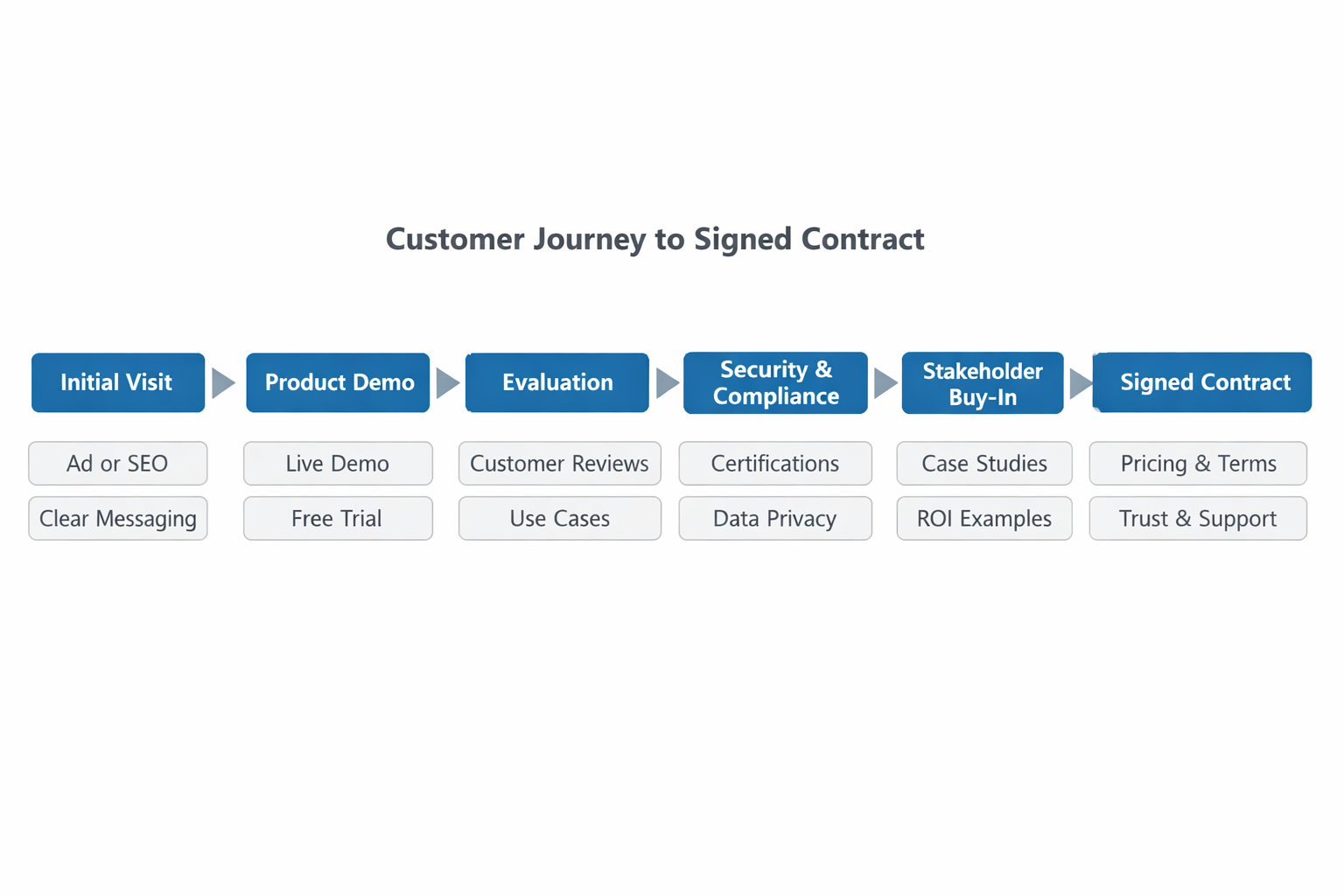
AI is changing software delivery, but leadership still sets the pace, guardrails, and culture
AI is transforming how software gets built, tested, supported, and iterated. But the companies that benefit most are not the ones that simply buy tools. They are the ones whose leadership defines how those tools should be used, where the guardrails are, and what “good” looks like.
That is why leadership content now matters in a very practical sense. OpenAI’s enterprise materials in 2026 repeatedly frame AI adoption as a leadership discipline: scaling AI is less about a technical rollout and more about building trust, adoption, workflow fit, governance, and proof in production. In another OpenAI report on frontier firms, the advantage comes not just from using AI more, but from using it more deeply and in more delegated workflows. (openai.com)
This is a major shift for company storytelling. A modern leadership page should not just list titles and career histories. It should help audiences understand how leadership shapes the AI era. For example:
How does leadership decide which work can be automated and which requires human review?
What policies guide responsible experimentation?
How are product, engineering, legal, and security aligned?
What does the company do when AI output is uncertain or wrong?
How does leadership ensure quality does not collapse under speed?
OpenAI’s introduction of OpenAI Presence also reflects this trend toward “built for trust before, during, and after launch,” with production sessions, escalations, and quality signals designed to show where a system works and where it needs attention. That kind of language is not just product messaging; it is leadership messaging. It tells audiences that the company sees AI as an operating discipline, not a marketing headline. (openai.com)
In 2026, strong leadership is not about pretending AI removes the need for judgment. It is about proving the opposite. The best companies show that AI can accelerate delivery only when leaders establish the standards, culture, and boundaries that keep quality intact.
Why security and governance are now part of the brand story, not just an IT checkbox
Security used to live in a separate part of the website, far away from the brand narrative. Governance was often buried in procurement docs, legal appendices, or technical whitepapers. In 2026, that separation no longer works. Security and governance are now core parts of a company’s brand story because they are core parts of the buyer’s decision-making process.
AWS’s Trust Center makes this change visible by packaging security practices, compliance programs, and controls into a public trust resource. AWS also emphasizes transparency around operator access and monitoring, showing that trust is supported by real mechanisms, not just promises. Likewise, AWS guidance on security assurance stresses the importance of adequate security and data protection measures as well as independent third-party assessment. (aws.amazon.com)
This matters because security is no longer only a technical concern. It is a business risk, a customer expectation, and often a brand differentiator. A company that explains how it handles access control, monitoring, compliance, and accountability earns more confidence than one that simply says it is “secure.” The same is true for governance. Buyers increasingly want to know whether AI systems are deployable in their environment, whether data is protected, and whether leadership understands the risks of scale.
The brand implication is significant: security content should not feel like a legal afterthought. It should feel like evidence of mature leadership. Governance content should not read like a compliance checklist. It should show decision quality. When companies do this well, they send a powerful message: we are not asking you to trust us blindly; we are showing you the systems that make trust reasonable.
How growth stories become more believable when they include numbers, milestones, and lessons learned
Growth stories are everywhere, but believable growth stories are rare. The difference is specificity. A generic claim like “we grew rapidly” creates little confidence. A story that includes numbers, clear milestones, and lessons learned feels much more real.
This is especially important in tech, where audiences know that rapid growth can mask instability. Numbers help anchor the story in reality. Milestones show progression. Lessons learned show maturity. A company that explains not only what happened, but what it learned and how it changed, becomes more credible than one that presents growth as effortless.
The same principle appears in current AI and enterprise materials. OpenAI’s enterprise signals and frontier-firm reporting rely on concrete usage patterns and changing adoption gaps to describe how organizations are evolving. That kind of evidence makes the narrative more convincing because it is measurable, not just aspirational. (openai.com)
For a modern company website, the most effective growth content often includes:
revenue or usage milestones, when appropriate
customer count or market expansion context
product launches tied to business impact
hiring or team-building milestones
examples of operational improvements
lessons learned from scaling, not just wins
This is where many “about us” pages fall short. They tell a neat origin story and stop there. The better approach is to show the evolution of the business. How did the team adapt? What broke? What improved? What did leadership learn about delivery, customer needs, or governance? Those details make growth feel earned.
Trust grows when companies talk about progress as a process, not a performance.
The role of social impact and community investment in strengthening long-term credibility
Social impact and community investment are no longer peripheral to credibility. For many audiences, they are part of the core assessment of whether a company deserves long-term trust. This does not mean every company needs to present itself as a social enterprise. It does mean that modern audiences increasingly notice whether a company invests in the communities, ecosystems, and people around it.
This matters for both buyers and candidates. Buyers want to partner with organizations that think beyond quarterly momentum. Candidates want to join companies that contribute something meaningful beyond internal growth. Social impact can include education initiatives, open-source contributions, local hiring, sustainability efforts, volunteer programs, or support for underrepresented talent. What matters is that the effort is genuine and sustained.
The credibility benefit comes from consistency. If a company claims to value people but never shows how it invests in people, the claim weakens. If it talks about innovation but ignores ecosystem contributions, the story feels incomplete. On the other hand, when impact work is tied to actual company behavior, it reinforces the broader narrative of responsibility and accountability.
The best companies are careful not to turn impact into decoration. They connect it to their mission and operating model. For example, a developer tools company might support education in technical communities because it strengthens the future talent pipeline. A cloud company might support digital skills because it expands access to the technologies it sells. A security company might contribute to public awareness because trust depends on a better-informed ecosystem.
In 2026, community investment helps companies prove that they are building for the long term, not only for the next campaign. That kind of credibility compounds.
A better structure for modern company storytelling: mission, evidence, outcomes, and accountability
A stronger company story in 2026 usually follows a simple but powerful structure: mission, evidence, outcomes, and accountability.
Mission answers why the company exists. It should be clear and specific, not vague or overly lofty.
Evidence shows how the company operates in practice. This is where leadership, security, governance, and process become visible.
Outcomes demonstrate the value created for customers, employees, and the market.
Accountability explains who owns what, how decisions are reviewed, and how the company responds when things go wrong.
This structure works because it mirrors how trust is actually formed. People do not trust a company simply because it says the right words. They trust it when the words are connected to behavior and results. OpenAI’s enterprise content, AWS trust materials, and Google Cloud’s DORA research all reflect versions of this model: a claim is made, evidence is presented, outcomes are described, and the underlying discipline is made visible. (openai.com)
A modern storytelling architecture might look like this:
1. Mission
What problem are we solving, and for whom?
2. Leadership
Who is responsible for strategy, execution, and culture?
3. Proof
What can we show—security controls, delivery metrics, customer outcomes, certifications, or operational milestones?
4. Impact
How do customers, communities, or employees benefit?
5. Accountability
How do we measure progress, handle risk, and learn from mistakes?
This approach is stronger than a traditional “about us” page because it aligns with how modern buyers and candidates evaluate companies. It is not about sounding bigger. It is about being clearer. And clarity is one of the highest forms of credibility.
Real-world examples of trust-building content sections that outperform old-school “about us” pages
The most effective trust-building content in 2026 often appears in sections that older company sites used to underdevelop or hide. These sections outperform generic “about us” pages because they answer the real questions audiences care about.
Leadership pages with substance
A strong leadership page does more than list names and titles. It explains what each leader brings, what decisions they influence, and how their background supports the company’s mission. When leadership is framed as operational responsibility rather than vanity, the page becomes more useful and more believable.
Trust or security centers
AWS’s Trust Center is a strong example of a dedicated trust resource. Rather than leaving security as a hidden procurement topic, it makes trust information easier to find and understand. That approach helps customers evaluate risk with greater confidence. (aws.amazon.com)
Research and methodology pages
Google Cloud’s DORA materials show how research-backed content can reinforce credibility. A page that explains performance drivers, delivery practices, and the cultural dimensions of software delivery offers more value than generic brand language because it demonstrates expertise. (cloud.google.com)
Customer outcomes and case studies
The best case studies do not just celebrate wins. They explain context, constraints, the solution, and the measurable result. They also mention tradeoffs and lessons learned, which makes the story more believable.
AI governance and responsible-use sections
As AI becomes embedded in products and operations, audiences want to know how companies are managing quality, privacy, escalation, and human oversight. OpenAI’s 2026 enterprise materials reflect this need by showing how leaders can build trust into the operating model, not bolt it on later. (openai.com)
Impact and community pages
A well-written impact page shows how the company contributes to people and communities in ways that are aligned with its mission. It works best when it uses concrete examples rather than broad philanthropic language.
Taken together, these sections outperform old-school “about us” pages because they are functional. They help users decide. They reduce uncertainty. They create confidence. And they make the company feel real.
Conclusion: The best tech brands don’t just describe themselves—they demonstrate value consistently
In 2026, credibility is no longer built by a polished leadership page alone. It is built through a broader system of proof: visible leadership, credible expertise, transparent security, measured growth, thoughtful governance, and sustained community investment. The companies that win trust do not rely on generic branding to carry the story. They make the story visible in the way they operate and communicate.
That is the real lesson for modern tech brands. Buyers and candidates are not asking for perfection. They are asking for evidence. They want to understand who leads, how decisions are made, how risks are handled, and whether the company can keep delivering when conditions change. They trust companies that show their work.
So the best modern tech storytelling is not loud. It is clear. It is specific. It is grounded in measurable outcomes and accountable leadership. The companies that understand this do more than describe themselves. They demonstrate value consistently—and that is what credibility looks like now.